Car Detailing, Everything you Need: A Girl’s Guide
Published on
A Girl’s Guide to Car Detailing: Easy DIY Car Cleaning for Beginners
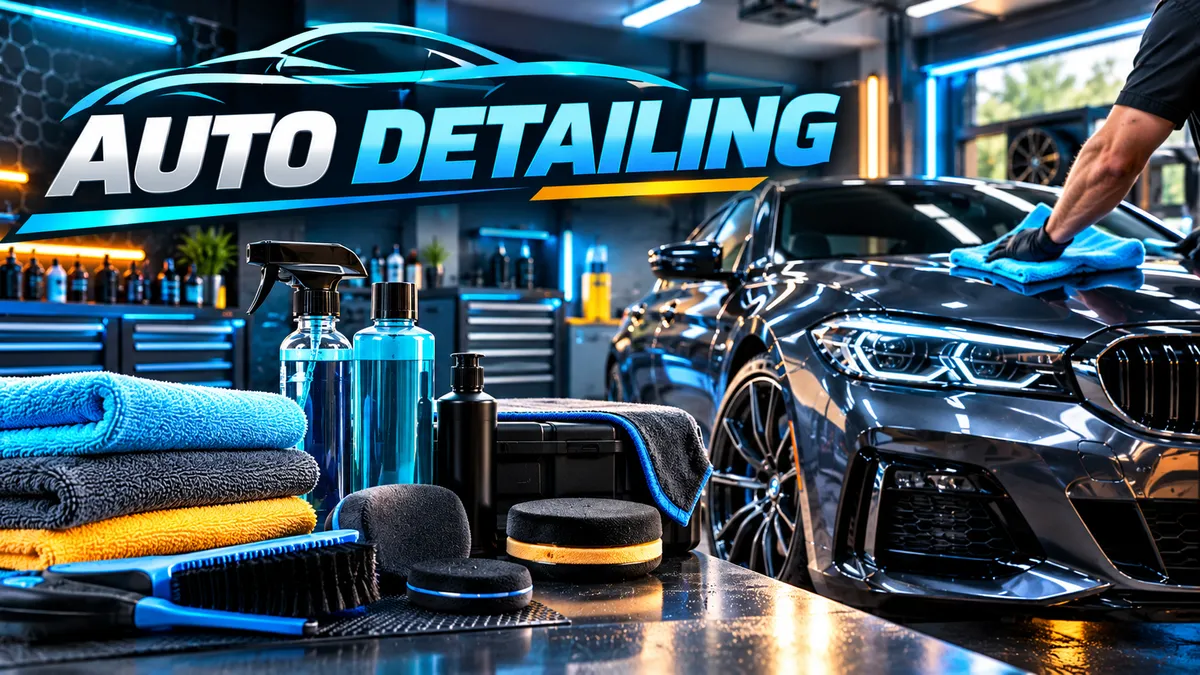
Let’s be honest—keeping your car clean can sometimes feel like a never-ending chore. Between coffee spills, dusty dashboards, dirty wheels, fingerprints, and whatever mysteriously ended up under the seats, your car can go from clean to chaotic pretty quickly.
The good news? You don’t need to be a professional detailer to make your car look amazing.
With a few essential car detailing products, the right tools, and a little time, you can give your vehicle that clean, fresh, just-detailed look right in your driveway.
This beginner-friendly car detailing guide for women covers the basics of exterior and interior detailing, along with the products and tools worth keeping in your car-cleaning kit.
What Is Car Detailing?
Car detailing goes beyond a typical trip through the car wash.
While a regular car wash mainly focuses on removing surface dirt, automotive detailing involves thoroughly cleaning, protecting, and maintaining both the exterior and interior of your vehicle.
A basic DIY detailing routine can include:
Washing the exterior Cleaning the wheels and tires Removing stubborn paint contaminants Cleaning windows and mirrors Vacuuming the interior Cleaning seats, plastics, and trim Protecting interior surfaces Polishing and protecting the paint
You don't have to do everything every time. Even a simple car detailing routine for beginners can make a noticeable difference.
Exterior Car Detailing Essentials

Start with the outside of your vehicle. Removing dirt and road grime regularly can help keep your paint, wheels, and tires looking their best.
1. Car Wash Shampoo
A good car wash shampoo is one of the most important products in your detailing kit.
Look for a pH-balanced car shampoo designed specifically for automotive paint. A quality shampoo should help loosen dirt and grime while providing enough lubrication to reduce the chance of scratching the paint during washing.
When shopping for car wash soap for beginners, consider:
pH-balanced formulas Good lubrication Easy rinsing Rich suds Compatibility with your vehicle's finish
Tip: Avoid using household dish soap as your regular car wash solution. Automotive shampoos are formulated specifically for vehicle surfaces.
2. Microfiber Wash Mitt
A microfiber wash mitt makes washing your car much easier and gentler than using an old towel or household sponge.
The soft fibers help trap dirt rather than dragging it across the paint.
For a beginner's DIY car detailing kit, look for microfiber wash mitts that are:
- Soft and absorbent
- Easy to rinse
- Machine washable
- Large enough to comfortably hold
Pair your wash mitt with a clean bucket and automotive shampoo for a simple at-home car wash setup.
3. Wheel Cleaner
Your wheels collect some of the dirtiest stuff on your car—including brake dust, road grime, and dirt.
A dedicated wheel cleaner can make cleaning them much easier.
Before purchasing one, check that the formula is safe for your particular wheels. Different finishes, including painted, chrome, polished, and alloy wheels, can have different care requirements.
For DIY wheel cleaning for beginners, always follow the product's instructions and don't allow the cleaner to dry on the surface unless the manufacturer specifically says it's safe to do so.
4. Tire Dressing
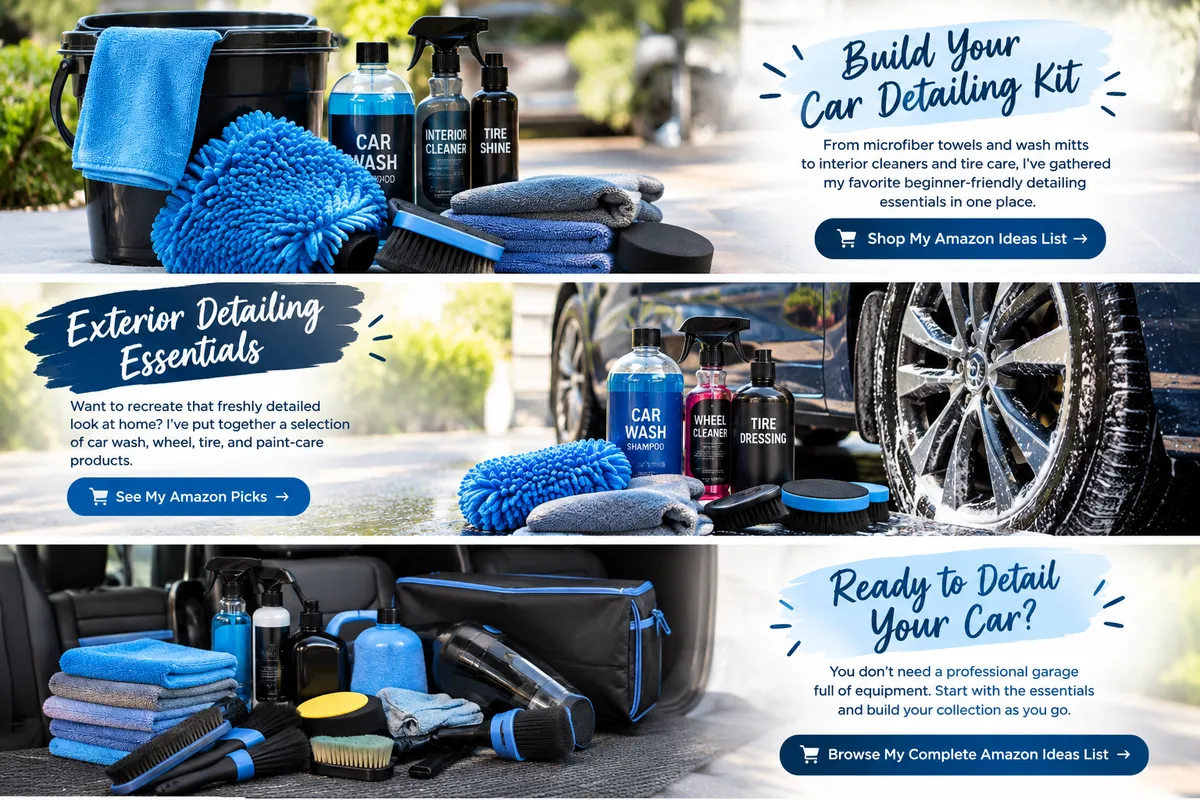
Once your tires are clean, tire dressing can give them a finished appearance.
A good tire shine and dressing can enhance the look of your tires while helping protect the rubber from environmental exposure.
If you prefer a more natural appearance, look for a satin or low-gloss finish instead of an extremely shiny formula.
For everyday use, a non-greasy tire dressing that dries without sling can be especially convenient.
Interior Car Detailing Essentials
Now for the part we spend the most time looking at: the inside of the car.
A clean interior can make your daily drive feel completely different.
1. Interior Car Cleaner
An all-purpose automotive interior cleaner is a great starting point for your detailing kit.
Depending on the product, an interior cleaner can be used on surfaces such as:
- Plastic
- Vinyl
- Dashboard surfaces
- Door panels
- Trim
- Some upholstery
Always check the label before using a product on leather, suede, screens, or other specialty materials.
If you're searching for the best car interior cleaner for beginners, choose something easy to use that doesn't leave a heavy, greasy residue.
2. Microfiber Towels
You can never have too many microfiber towels when detailing a car.
Use separate towels for different jobs whenever possible—for example:
- Interior cleaning
- Glass
- Paint
- Wheels
- Applying protectants
Having dedicated towels can help prevent accidentally transferring wheel grime or other contaminants onto your vehicle's paint.
A microfiber towel set for car detailing is an inexpensive way to build up your supply.
3. Detailing Brushes
Detailing brushes are perfect for those annoying little areas that are difficult to clean with a towel.
Use them around:
- Air vents
- Dashboard buttons
- Cup holders
- Door handles
- Seams and crevices
- Console areas
- Interior trim
Look for soft detailing brushes for car interiors, particularly if you're working around delicate surfaces.
A small brush can make a surprisingly big difference.
4. Glass Cleaner
Clean windows can make your entire car feel fresher.
Choose an automotive glass cleaner designed to leave a streak-free finish. If your vehicle has tinted windows, check that the cleaner is compatible with window tint.
For cleaning tinted car windows at home, an ammonia-free automotive glass cleaner is generally a safer choice for many aftermarket tint applications.
Use a clean microfiber glass towel and wipe the windows thoroughly to avoid streaks.
Don't Forget the Paint: Clay, Polish & Protection
Once you've mastered the basic wash, you can take your detailing routine a step further.
5. Clay Bar Kit
Even after washing your car, the paint can still feel rough because of bonded contaminants that regular washing doesn't remove.
A clay bar kit for car detailing is designed to help remove these contaminants and leave the paint feeling noticeably smoother.
Before using a clay bar, make sure the surface is properly washed and lubricated according to the product's instructions.
You don't necessarily need to clay your vehicle every time you wash it. Think of it as a deeper cleaning step when the paint needs it.
6. Car Polish or Compound
If your paint has light imperfections or has lost some of its shine, a polish or compound may help restore its appearance.
A polish is generally used for refining the finish, while compounds are designed for more aggressive correction.
If you're new to paint correction, start slowly. DIY car polishing can be more involved than basic car washing, and improper technique can damage the finish.
For beginners, a quality polish applied by hand or with an appropriate dual-action polisher can be a good place to start.
7. Wax or Paint Sealant
After cleaning and polishing your paint, protect it with a wax or paint sealant.
These products can add gloss while helping provide a layer of protection against environmental contaminants.
When shopping for car wax for beginners, consider how easy the product is to apply and remove. There are plenty of beginner-friendly spray, liquid, and paste options.
If convenience is your priority, an easy-to-use spray sealant may be a great addition to your DIY car detailing supplies.
Helpful Car Detailing Tools & Accessories
You don't need a garage full of professional equipment to get started.
Here are a few accessories that can make detailing your car at home much easier.
Detailing Brushes
Keep a few different sizes of soft brushes handy for small spaces and hard-to-reach areas.
Foam Applicators
Foam applicator pads are useful for applying tire dressing, interior protectants, waxes, and other detailing products.
Microfiber Towels
Keep several clean microfiber towels available so you aren't tempted to reuse a dirty towel on another surface.
Vacuum
A good car vacuum can make cleaning carpets, seats, floor mats, and those mysterious crumbs hiding between the seats much easier.
Interior Protectant
An interior protectant can help maintain surfaces such as dashboards, door panels, and trim.
Look for a non-greasy interior protectant with UV protection if that's an important feature for your vehicle.
A Simple Car Detailing Routine for Beginners
If you're overwhelmed by all the products, don't worry. You don't need to use everything at once.
Try this simple routine:
Step 1: Remove the clutter
Take out trash, bottles, bags, and anything else that doesn't belong in the car.
Step 2: Vacuum
Vacuum the seats, carpets, floor mats, trunk, and hard-to-reach areas.
Step 3: Clean the interior
Use an appropriate interior cleaner and microfiber towels to clean the dashboard, doors, console, and other surfaces.
Step 4: Clean the windows
Use automotive glass cleaner and a clean microfiber towel.
Step 5: Wash the exterior
Rinse the car, wash it with automotive shampoo and a microfiber mitt, then rinse thoroughly.
Step 6: Clean the wheels and tires
Use an appropriate wheel cleaner, rinse, dry, and finish with tire dressing if desired.
Step 7: Protect the paint
Apply your preferred wax or sealant according to the manufacturer's directions.
And that's it!
You just completed a basic DIY car detailing session at home.
Build Your Own Car Detailing Kit
You don't have to buy every detailing product available.
If you're starting from scratch, begin with these essentials:
Basic car detailing checklist:
- ☐ Car wash shampoo
- ☐ Microfiber wash mitt
- ☐ Microfiber towels
- ☐ Wheel cleaner
- ☐ Tire dressing
- ☐ Interior cleaner
- ☐ Glass cleaner
- ☐ Detailing brushes
- ☐ Foam applicators
- ☐ Vacuum
- ☐ Wax or paint sealant
Once you become more comfortable with detailing, you can add products such as a clay bar, polish, compound, specialty cleaners, and additional detailing tools.
Want to see the products I recommend? Visit my Amazon Ideas List for a convenient collection of car detailing supplies and accessories.
Final Thoughts
Car detailing doesn't have to be complicated, expensive, or intimidating.
With a few basic products and the right techniques, you can learn how to detail your car at home and keep your vehicle looking clean and cared for between professional detailing appointments.
Start with the basics, work one section at a time, and don't feel like you need every product on the shelf.
The goal isn't perfection—it's having a car you're proud to drive.
And honestly, there's something pretty satisfying about stepping back after a good detailing session and seeing your car looking brand new again.